Long Beach ADU Guide: Rules, Costs, and Permit Steps
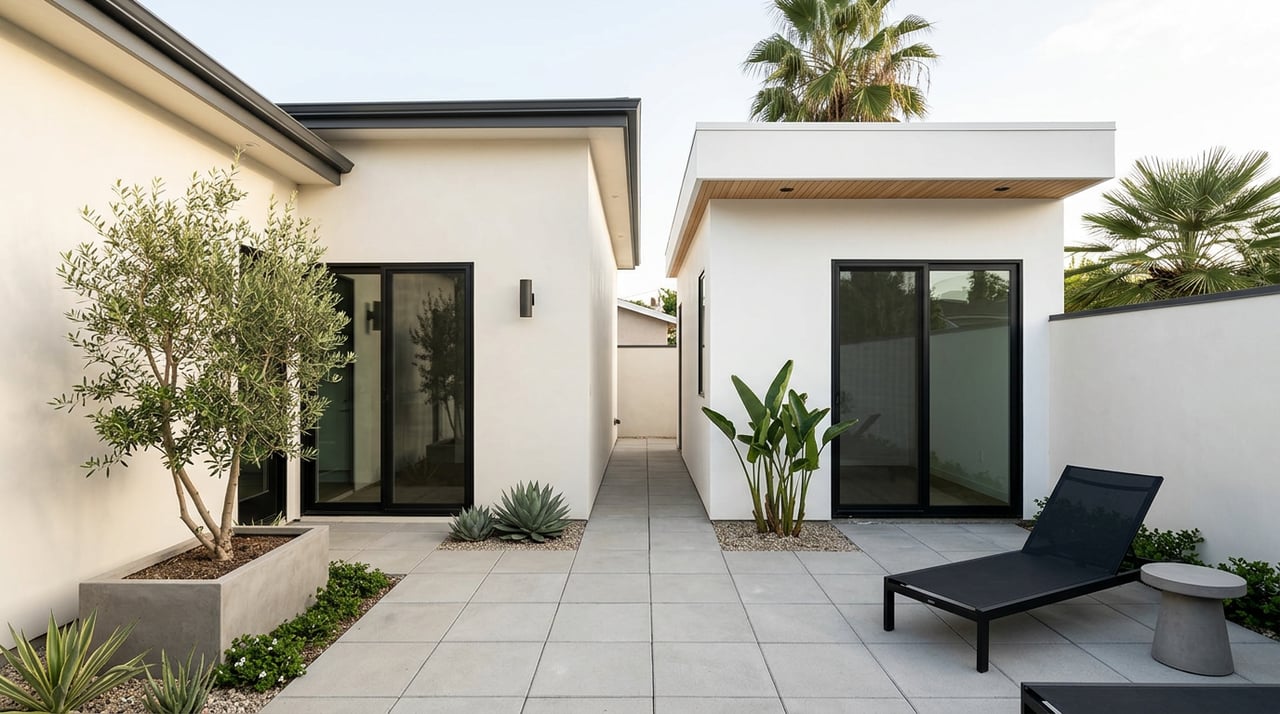
Thinking about adding an ADU on your Long Beach property? The right design can unlock rental income, create space for extended living, and boost long-term value. The challenge is knowing the rules, timelines, and costs so you can move forward with confidence. In this guide, you will learn the must-know city and state rules, how Long Beach’s pre-approved plan program can save time, what impacts your budget, and a simple path to get from idea to permit. Let’s dive in.
Long Beach applies California’s state ADU law, which sets clear minimums and timelines that cities must follow. That means you can pursue detached or attached ADUs, and Junior ADUs up to 500 square feet inside the main home, in most residential zones. The city also runs a pre-approved plan program to streamline common detached backyard designs. You can review local summaries and contact Planning for site-specific guidance on counts and combinations for your parcel on the city’s ADU page. Visit the City of Long Beach’s ADU overview for details on eligibility and process at the Permit Center. See the city’s guidance on ADUs and contact points on the Long Beach ADU overview page.
State rules drive much of the process. The California Department of Housing and Community Development (HCD) provides a detailed handbook that cities and homeowners use as the statewide playbook for sizes, parking, fees, and timelines. You can find the latest standards and definitions in the HCD ADU Handbook.
State law requires cities to allow a detached ADU up to 1,200 square feet in many cases. For attached ADUs, cities must allow at least 800 square feet, and often up to 50 percent of the primary home’s size, with higher minimums for units with more than one bedroom. Conversions from existing structures often have more flexible size treatment. You can confirm the exact thresholds that apply to your zone using the HCD guide and Long Beach’s zoning summaries in the HCD ADU Handbook.
Setbacks are also state-governed. Local standards cannot prevent you from building at least an 800-square-foot ADU with 4-foot side and rear setbacks. For new detached units, expect current energy code requirements, including solar and Title 24 measures in many cases. The HCD guide outlines these energy and PV requirements in the HCD ADU Handbook.
Parking is often simpler than you think. State law limits requirements to no more than one space per ADU or per bedroom, and tandem spaces can count. There are five key exemptions when no parking may be required, including if you are within one half mile of transit, converting or attaching to an existing structure, in certain historic or significant districts, if on-street permits are required but not offered to the ADU resident, or if a car-share stop is within one block. Review the exemptions and how they apply to your block in the HCD ADU Handbook.
Under state law, impact fees are waived for ADUs under 750 square feet. For larger ADUs, any impact charge must be proportionate to the size of the ADU compared to the primary dwelling. Utility connections and capacity charges also follow state standards that limit separate connections in many cases for smaller units. You can read the fee and connection provisions in the California Government Code at Section 65852.2. Local plan check and permit fees still apply, so confirm current city fee schedules before finalizing your budget on the Long Beach ADU overview page.
Owner occupancy is not required for ADUs under current state law, while Junior ADUs are treated differently and often require an owner to live in either the main home or the JADU. On a typical single-family lot, you can usually build one ADU and one JADU, subject to lot conditions and overlays. If you are considering SB 9 or multifamily scenarios, talk with the Planning Bureau about combinations and overall unit caps. State policy and local application are covered in the HCD ADU Handbook and the city’s ADU overview.
If your property is in Long Beach’s Coastal Zone or a historic district, expect extra steps. Coastal properties often need a Local Coastal Development Permit or a categorical exclusion. Recent state actions aim to streamline these coastal reviews. SB 1077 requires the California Coastal Commission to develop guidance to help local governments ease ADU permitting, with timelines that point to faster decisions once implemented. You can read about coastal streamlining at the California Coastal Commission’s SB 1077 page. Start by confirming overlays with Planning and the city GIS using the Planning Bureau’s page.
Historic districts introduce design review, and you may need a Certificate of Appropriateness. These overlays do not block ADUs in most cases, but they can change design details and timing. It pays to confirm this early, before you spend on full plans.
Long Beach processes ADUs ministerially and follows the state 60-day review rule once your application is complete. The city advertises typical plan check windows around 4 to 6 weeks, depending on complexity and current workload. Intake is at the Permit Center, with concurrent review by Planning and Building & Safety. You can find the intake steps and contact details on the Long Beach ADU overview page.
Long Beach offers a Pre-Approved ADU (PAADU) program with city-reviewed designs for common detached units. If your site and scope match a PAADU template, you may be eligible for Over-The-Counter review and even same-day issuance. PAADU applies to new detached construction only, not conversions. These plans can reduce design costs and shorten timelines. Explore eligible footprints and OTC criteria on the PAADU program page.
Under state law, the city must tell you within 30 days if your application is complete and list any missing items. Once complete, the city must approve or deny within 60 days for most ADU projects. Expect at least one round of plan corrections for new detached builds. The state standards that govern these timelines are outlined in the HCD ADU Handbook. For typical review windows and in-person intake instructions, see the Long Beach ADU overview page.
Older homes may need water, sewer, or electrical upgrades to support a new unit. These capacity changes can affect both budget and schedule. For fire and building standards, all ADUs must meet current California codes, and the local fire authority may require access or sprinkler-related items that influence design. If your property is in an HOA, state law limits rules that unreasonably restrict ADUs, though design review may still apply. HCD covers utility, fire, and HOA considerations in the HCD ADU Handbook.
Construction costs vary by scope and site. Statewide studies report that straightforward conversions can range from roughly the low tens of thousands up to about 150,000 dollars. New detached construction commonly runs in the 150,000 to 400,000 dollar range or more in coastal markets, depending on size, finishes, site work, and labor. These are planning ranges. Get local bids for accuracy. For statewide context and drivers, see the Terner Center’s analysis in the ADU cost and delivery report.
Soft costs add up. Architectural and engineering plans, energy calculations, surveys, title reports, and city plan check and permit fees can total several thousand to tens of thousands of dollars. PAADU designs help reduce some of these costs and time if your site qualifies. You can review OTC eligibility and submittal requirements on the PAADU program page.
On the income side, Long Beach rental indices in early 2026 show average asking rents around 2,100 to 2,650 dollars per month across the city, with wide variation by neighborhood, unit size, and finishes. A well-designed studio or one-bedroom ADU in a convenient area can often achieve solid absorption, especially if it offers privacy and in-unit laundry. Use current neighborhood comps and be conservative on vacancy and maintenance.
Short-term rentals are not a viable ADU strategy in Long Beach. The city’s rules do not count ADUs as qualified units for short-term rental registration. If your plan depends on nightly or weekly rental rates, revisit the numbers or consider a different path. Review the city’s rules on the Short-Term Rental page.
Here is a simple planning example. A 600-square-foot ADU that rents for 2,000 dollars per month produces 24,000 dollars in gross annual rent. If your all-in cost is 200,000 dollars, that is a 12 percent gross yield before expenses. After operating costs, reserves, and financing, the net yield is lower. Use this as a starting point and build a project-specific pro forma.
Long Beach has been a top producer of ADUs in California, which reflects practical process improvements like the PAADU program and streamlined intake. Local reporting highlights that the city has taken steps to accelerate permits and support common backyard designs. You can read more context in coverage from the Long Beach Post about the city’s leadership in ADU production at the Long Beach Post article.
Adding an ADU is part design, part permitting, and part investment math. You deserve a plan that fits your property, your budget, and your long-term goals. If you want help pressure-testing feasibility, estimating rent potential, or preparing a clear permit path, connect with a local team that understands both the residential and investment sides of ADUs. Schedule a Strategy Call with Johnathon Cardwell to map your next steps.
We pride ourselves in providing personalized solutions that bring our clients closer to their dream properties and enhance their long-term wealth. Contact us today to learn how.