The Huntington Beach Disclosure That Doesn't Expire at Closing
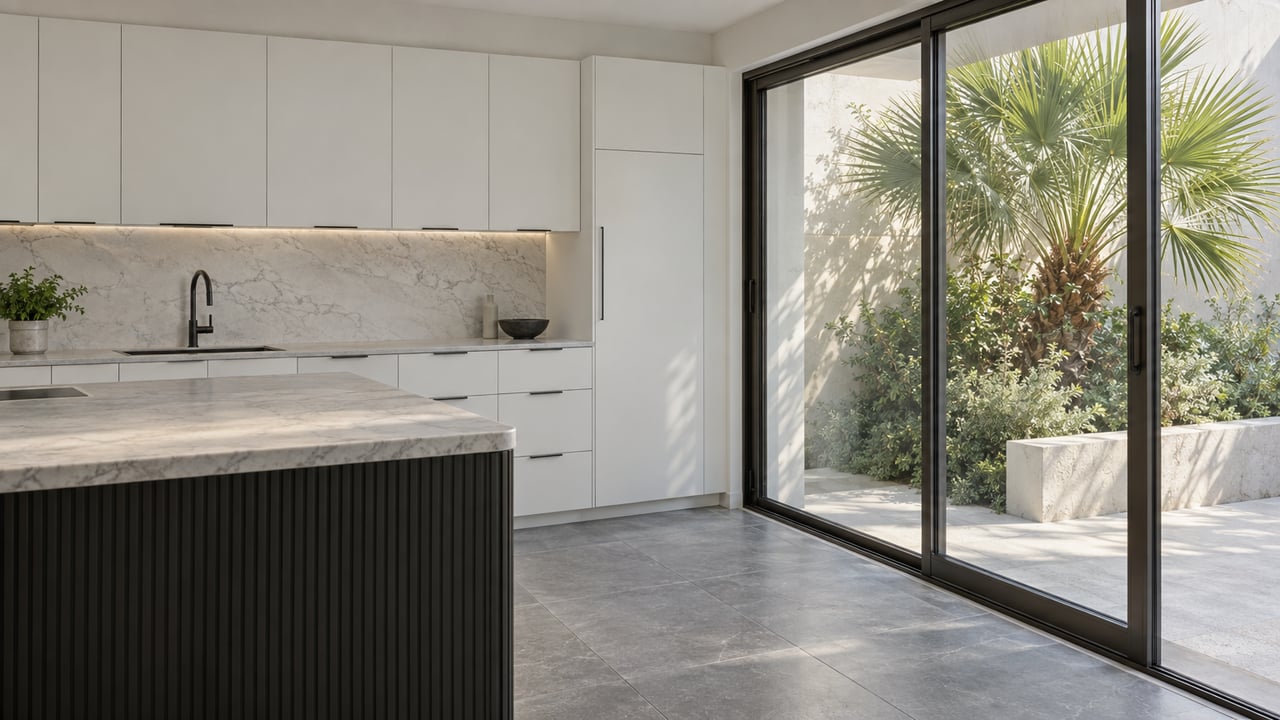
A nearly one-acre parcel on Pacific Coast Highway, tucked between Goldenwest Street and Seapoint Street about a mile north of the pier, spent close to a century producing oil. It sat inside the historic Huntington Beach Oil Field, the same field where companies like Standard Oil of California and Texaco drilled wells that once made this stretch of coastline one of the top oil-producing patches in the state. Today that parcel is a construction site for ten detached homes priced between $7 million and $8 million each, developed by the Irvine-based WJK Development Co., with completion targeted for 2026. Grading started in late 2025, once every approval was finally in hand. When the homes are finished, nothing about them will hint at what the ground used to do for a living.
Getting from working oil field to finished foundation took more than a signed purchase agreement. WJK bought the parcel from California Resources Corp. of Long Beach for $10.3 million in 2024, and the deal required a due diligence process built around a nearby abandoned oil well production site: Phase I and Phase II Environmental Site Assessments, CalGEM well abandonment certifications for any wells on or near the parcel, methane and soil vapor testing under the city's own City Specification No. 429, and documentation of any Vapor Intrusion Mitigation System built into the structure.
That checklist is not unique to a ten-lot luxury project. It is the same checklist that governs a room addition or an ADU three streets inland, and most buyers don't meet it at the closing table. They meet it later, at the permit counter, often years after they thought the paperwork was finished.
California's standard disclosures do real work. For a legacy oil field parcel, a separate question matters most: is there a well, plugged or otherwise, under or near this lot, and does the city consider this ground part of its Methane Overlay District.
On a property that changed hands two or three times since the last active well was capped, the disclosure packet may be silent on the one condition that will matter the next time anyone pulls a permit. That leaves a gap between what appears in sale paperwork and what a later permit application may bring to light.
Huntington Beach's own municipal code closes that gap in a different way, at a different moment. Under Chapter 15.32 of the city code, no building or grading permit can be issued for a parcel with an active or abandoned oil well until the Fire Code Official signs off, following the process laid out in City Specification No. 422. That approval isn't a formality tied to the sale. It's tied to the permit application itself, which means it can surface the first time a homeowner tries to add a bedroom, convert a garage, or build an ADU, regardless of how long they've owned the house or what the original disclosure said.
City Specification No. 429 spells out what triggers that review in more detail: an Administrative Boundary drawn around any surface area underlain, or reasonably believed to be underlain, by an oil or gas pool as defined by the state's Geologic Energy Management Division, known as CalGEM. Construction inside that boundary can require a gas membrane barrier beneath the slab, vent piping, and in some cases ongoing gas monitoring, all reviewed by the Huntington Beach Fire Department before a permit moves forward. None of this shows up on a walkthrough. It shows up on a plan check.
Properties west of Pacific Coast Highway carry a second layer worth knowing about. The city's Coastal Development Permit ordinance treats a major remodel, generally one involving 50 percent or more of a structure, as its own form of development requiring separate coastal review, on top of whatever the standard building permit already demands. A homeowner planning a substantial renovation in the Coastal Zone can be looking at two separate approval tracks running at once, one for the building itself and one for its effect on coastal resources.
The Magnolia Coast development shows how far this due diligence can reach even when a project has every entitlement it needs. The 29-acre site is a former tank farm being subdivided into residential, open space, and commercial lots. Getting it ready for houses means importing an estimated 133,000 to 425,000 cubic yards of soil to raise the site by about four feet to meet current sea level rise standards, plus building a combined 17-foot retaining and block wall along the north property line specifically to barrier the site from potential contamination migrating from the adjacent Ascon property. The Huntington Beach Planning Commission approved the project unanimously in January 2026, with commissioners confirming it implements entitlements the city had already granted years earlier. Even a fully entitled, professionally engineered project on former industrial land still has to answer for what's in the ground next door.
None of this is a story about the 1920s. The California Geologic Energy Management Division has an active Plug and Seal Effort underway in Huntington Beach in 2026, with resident notices going out as recently as March of this year about work planned at a specific residential address in the 92648 zip code. Wells that were abandoned decades ago under older standards can be reopened and re-abandoned to current requirements, which call for verified cement isolation and groundwater protection that didn't exist when many of these wells were first capped. The oil field under parts of Huntington Beach isn't a settled historical fact. It's an active regulatory file with new entries being added this year.
None of this is a reason to avoid buying, selling, or building in Huntington Beach's legacy oil footprint. Thousands of houses sit on or near this ground and function normally. It is a reason to ask a few specific questions before the ink dries, rather than after a contractor opens a wall:
Over the six months ending in September 2026, Huntington Beach single-family homes priced correctly have been selling in a median of about 13 days, based on closed sales data covering that window. That pace sits well below the roughly 40-day median time on market for homes still actively listed, and it points to a gap of about $390,000 between the median asking price of current listings and the median price of what actually closed, a spread that reflects product mix as much as anything else, since the active pool skews toward larger homes closer to the sand while the fastest-moving sales tend to be inland tract product. In a market moving that quickly, the window to ask these questions before writing an offer is short, and it's easy to let it close along with everything else in a compressed escrow.
Does every Huntington Beach home sit on old oil ground? No. The historic field and its methane overlay cover specific parts of the city, concentrated around the coastline and certain inland pockets, not the entire municipality. A parcel's status is knowable, not a guess.
Is a mapped methane parcel a defect I should expect a credit for? Not typically. It's treated as a condition of the lot, similar to how liquefaction risk is treated, something to document and plan around rather than something to remedy with a repair credit.
Does this affect insurance? It can factor into how a lender or insurer views the property, particularly if construction plans are part of the picture. Raising it with an insurer early, alongside the mitigation question, avoids surprises later.
Buying, selling, or building on ground with this history in Huntington Beach rewards the kind of underwriting discipline that goes beyond the standard disclosure packet. If you're weighing a purchase, a listing, or an ADU project anywhere near the city's legacy oil footprint and want a clear read on what the permit process will actually require, CART Group is glad to walk through it with you before you write the offer, not after.
This article is general information, not legal, tax or financial advice. Consult a qualified professional about your situation.
We pride ourselves in providing personalized solutions that bring our clients closer to their dream properties and enhance their long-term wealth. Contact us today to learn how.