In Long Beach, the Fastest Mills Act Tax Break Isn't an Application. It's an Address.
If you filed a Mills Act application in Long Beach this year, you already know the wait. The city closed its 2026 window at 3 p.m. on March 20, and the next one doesn't open until early January 2027. Even if you'd made that deadline, the calendar behind it runs long: pre-contract inspections in April and May, a Cultural Heritage Commission review in July, City Council action sometime between August and September, contract recordation in December, a county reassessment by June 30, 2027, and the actual number showing up on a tax bill mailed the following October. Apply this spring and you might see a lower bill by the fall after next.
That's the path most people assume is the only door into Long Beach's best-known property tax incentive. It isn't. A Mills Act contract runs with the land, not the owner, and when the city restarted the program after a pandemic-era pause, it counted 117 properties already carrying one, scattered through its historic districts. Buy one of those homes and the contract transfers to you automatically at closing. No workshop, no fee, no year and a half of hearings. The discount you'd have waited through an entire election cycle to win is already sitting on the title.
That contrast is the whole story here, and it changes how you should shop a historic district in this city.
Long Beach adopted the state's Mills Act program in 1993, and the mechanics haven't loosened much since. Every applicant has to attend two mandatory workshops, and this year's processing fee ran $1,026.75, nearly double the $545 the city charged in 2025. The program also caps how many new contracts it approves in a given cycle. In 2019, the last year the city ran a full, well-documented round before a pandemic-era pause, it approved only 12 contracts for single-family homes and 10 more across duplexes, triplexes, and other multi-unit or commercial buildings. That's a low ceiling for a city with well over fifteen designated historic districts and thousands of contributing homes inside them.
The math on the back end is generous when it lands. City documents put the average reduction at 30 to 50 percent of the property tax bill for new applicants. But that average hides a detail worth sitting with: the city's own guidance says owners who've held their property for more than a decade are unlikely to see any meaningful reduction at all. The tax break isn't really a reward for owning a historic home. It's a reward for owning one recently.
Here's the mechanism that explains it. Once a Mills Act contract is recorded, the Los Angeles County Assessor calculates three separate values for the property: the Mills Act income-approach valuation, the standard Prop 13 factored base-year value, and current market value. Whichever of the three is lowest is what actually lands on the tax bill.
For someone who just bought at today's prices, the fresh Prop 13 base year value is high, so the Mills Act's income-approach number is usually the low one that wins, and the savings show up in full. For a longtime owner whose Prop 13 base year value has been frozen low since a purchase decades ago, that old base year number is often already lower than anything the Mills Act formula would produce. The contract exists. The rehab commitment exists. The tax break, functionally, doesn't.
That single rule is why the same historic bungalow can carry wildly different bills for two owners ten years apart on the deed, and it's why a Mills Act contract is worth the most to whoever's purchase price is freshest. If you're reading this because you're about to buy in Long Beach, that's you.
There's a second wrinkle worth knowing before you fall for a listing photo. If a Mills Act home gets a new addition or a substantial remodel, the county applies a blended valuation where the new construction gets far less benefit than the original historic structure. A contract on a house that's been significantly expanded won't save what the brochure implies.
The maintenance obligation attached to a Mills Act contract is tied to the specific architecture of the house, which means the "price" of the discount looks different depending on which district you're shopping.
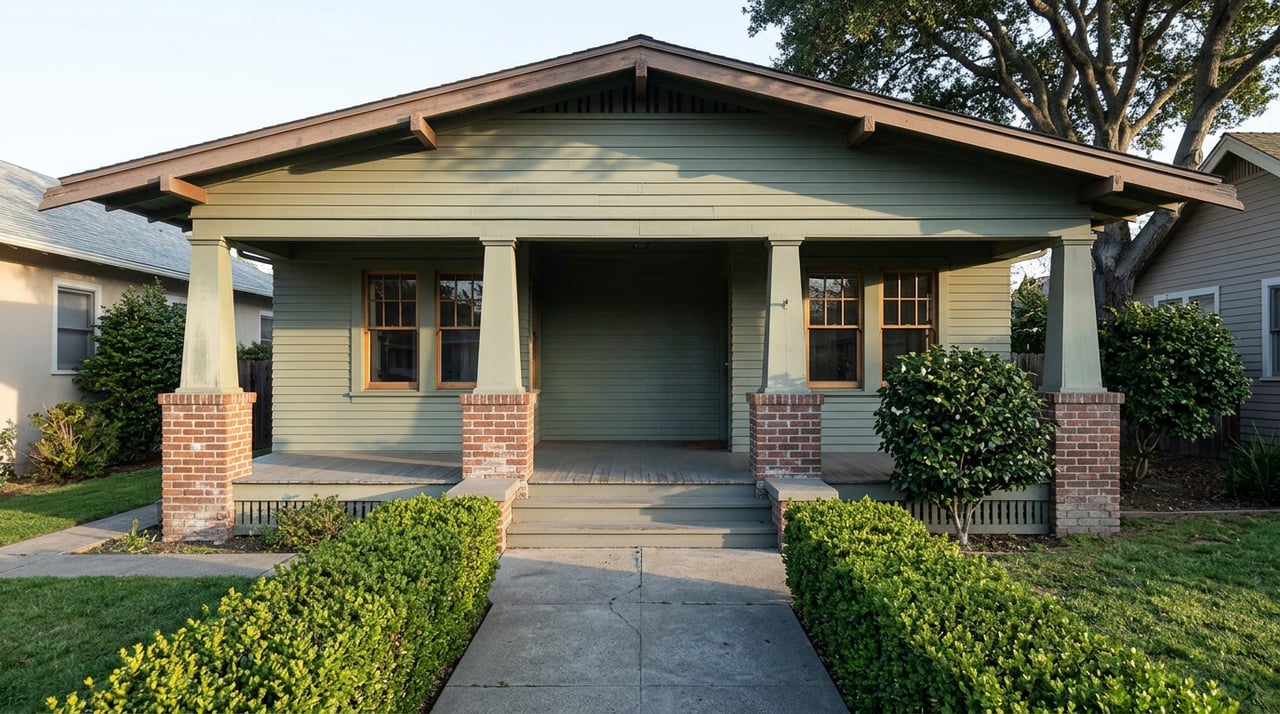
California Heights is the city's largest historic district, built out mostly between 1898 and 1923 with California Bungalows as the dominant style alongside sixteen other recognized architectural types, including Colonial Revival, Spanish and Mediterranean Revival, and Queen Anne. A contract here usually means maintaining a full bungalow envelope, porch to roofline.
Belmont Heights, part of the original Alamitos Beach Townsite annexed by the city in 1905, is more than half Craftsman bungalows built between 1910 and 1923, with a scatter of Victorian, Prairie, Spanish Revival, and Tudor Revival homes mixed in. The upkeep standards shift depending on which of those styles you land in.
Bluff Heights, adopted as a district in 2004, runs to larger two-story Craftsman and Period Revival homes built between 1903 and 1949, many of them steps from the ocean-facing lawns of Bluff Park. Bigger houses generally mean a bigger annual scope of qualifying work.
Brenner Place is the opposite extreme: a single block east of Alamitos Avenue with ten identical one-story homes on a narrow private street, most without driveways or garages. The Mills Act obligation there is modest in scale but comes with a lifestyle trade-off that has nothing to do with taxes.
Wrigley, developed between 1928 and 1934 by the chewing-gum family it's named for, is mostly modest, working-class Spanish Colonial Revival cottages, smaller in footprint than the bluff-adjacent districts and correspondingly lighter on required upkeep.
None of that changes whether the tax formula favors you. It changes what you're signing up to maintain if it does.
If a listing sits inside one of Long Beach's historic districts, ask these questions before the discount becomes part of your math:
None of this is a reason to avoid a historic district purchase. It's a reason to run the specific numbers on the specific house before you assume the brochure math is your math.
Comparing Long Beach's historic districts on architecture alone tells you what a house looks like. Comparing them on how the Mills Act actually lands, contract-by-contract and owner-by-owner, tells you what it will cost you to live there. If you're weighing a purchase in Wrigley, Rose Park, California Heights, or any of the city's other designated districts and want the tax math run on an actual address before you write an offer, CART Group can walk through it with you.
Schedule a Strategy Call.
If I buy a home that already has a Mills Act contract, do I get the same tax bill as the seller? No. The county reassesses the property at your purchase price like any other sale, then compares that new Prop 13 base year value against the Mills Act's income-approach valuation and the current market value. Whichever of the three is lowest is what you pay. Because your purchase price is fresh, that comparison usually works in your favor, often more than it did for the seller who'd owned the home for years.
What happens to the tax benefit if I don't keep up the required work? The contract is built around an annual Schedule of Work filed with the city, and that documented upkeep is the entire justification for the reduced assessment. Before you commit to a home carrying an existing contract, it's worth reviewing what work is already scheduled and confirming it's been kept current, since the tax relief and the maintenance record are tied together by design.
We pride ourselves in providing personalized solutions that bring our clients closer to their dream properties and enhance their long-term wealth. Contact us today to learn how.