House Hacking In Long Beach With ADUs And Duplexes
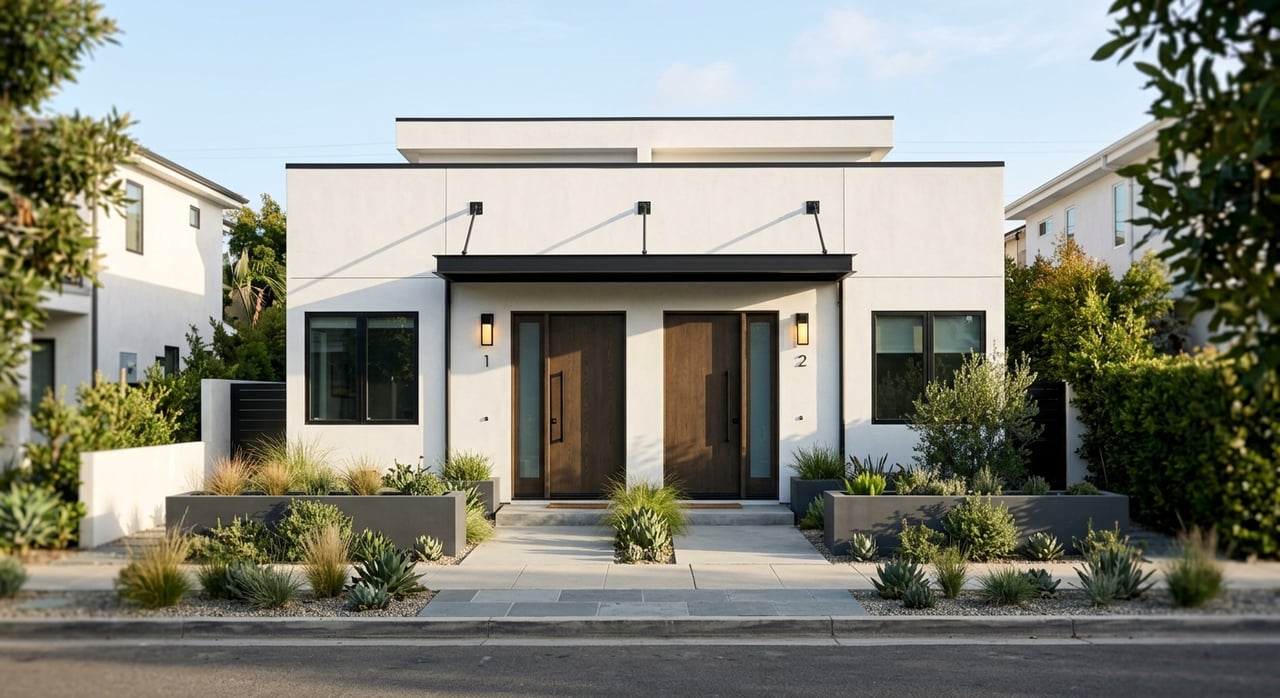
If Long Beach home prices have you wondering how anyone buys and comfortably keeps a home, house hacking may be the strategy that makes the numbers work. In a city where many residents rent and housing costs are a real pressure point, buying a property with an ADU or an extra unit can help you offset your monthly payment while building long-term equity. If you are exploring a duplex, a single-family home with ADU potential, or a small multifamily property, this guide will help you understand what matters in Long Beach. Let’s dive in.
Long Beach is a renter-heavy market, and that matters if you are trying to make homeownership more practical. Census QuickFacts reports an owner-occupied housing unit rate of 41.2%, a median owner-occupied home value of $806,600, a median gross rent of $1,871, and median monthly owner costs with a mortgage of $2,984. The city’s Housing Element also says 60% of residents rent, 55% of renter households are housing-cost burdened, and rents rose 20% from 2010 to 2020.
That local backdrop is exactly why house hacking gets so much attention here. When you can live in one part of a property and rent another unit, the rental income can help offset ownership costs in a way that may be more meaningful than in a lower-cost market. In Long Beach, that can turn a stretch purchase into a more sustainable one.
The city is also planning for more housing variety. Long Beach’s 2021-2029 Housing Element says the city needs 26,502 housing units and is rezoning to support a broader mix of homes, including ADUs, duplexes, and bungalows near jobs and high-quality public transportation. For buyers, that makes small-scale, owner-occupied investment strategies especially relevant.
House hacking simply means you buy a property, live in part of it, and rent out the rest. The goal is not just to collect rent. It is to reduce your housing costs while owning an asset that may appreciate over time.
In Long Beach, the most common versions usually fall into three buckets:
Each option can work, but each comes with different zoning, financing, and property-condition questions. That is why the best opportunity is not always the prettiest listing. Often, it is the one with the clearest path to legal use and solid underwriting.
For many first-time house hackers, a duplex is the cleanest setup. The rentable space is already separate, which can make the property easier to evaluate from both a lifestyle and financing perspective. You know where you will live, where your rental income may come from, and how the property functions day to day.
HUD says FHA financing can be used on one- to four-unit properties, with down payments as low as 3.5%, and owner-occupant borrowers must occupy the property within 60 days. That makes owner-occupied duplexes especially relevant if you want to enter the market with a lower down payment than a typical investment purchase might require.
From a practical standpoint, duplexes can also be easier to analyze than an ADU project. You are typically evaluating an existing second unit rather than estimating construction cost, permit timing, and design constraints. That simplicity can be a real advantage in a high-cost market.
If a duplex is not in reach, a single-family home with ADU potential may still create a house-hacking path. In Long Beach, one ADU is allowed on a single-family dwelling lot, and JADUs are capped at 500 square feet and limited to single-family lots. That opens the door to buying a home with a garage conversion opportunity, a detached backyard build, or another code-compliant accessory unit strategy.
Long Beach is currently administering state ADU law directly while a local ordinance is still being developed. The city also notes that ADU rules remain an active compliance issue, so buyers should check the current city bulletin and the state handbook before underwriting a deal. In other words, ADU potential should be verified, not assumed.
The city’s ADU summary also says parking is often not required in several common cases. Those include proximity to transit, a historic district, an interior conversion, or when the ADU is built with a new single-family or multifamily home on the same lot. In a built-out city like Long Beach, reduced parking requirements can make a major difference in feasibility.
If you are comfortable with more moving parts, a triplex or fourplex can accelerate the house-hacking model. You live in one unit and rent the remaining units, which may create more income support than a single rental unit would. For some buyers, that can be the fastest way to combine homeownership with small-scale investing.
There is also an ADU angle on multifamily properties. Long Beach says that on existing multifamily lots, attached ADUs come from converting existing non-livable space, and detached ADUs can reach eight units or the number of legally permitted principal units, whichever is less, effective January 1, 2025. That means some multifamily properties may have additional long-term potential beyond the current rent roll.
That said, more upside usually comes with more diligence. You need to confirm the number of legally permitted principal units, review zoning carefully, and understand any overlay restrictions before you count on added unit potential.
In Long Beach, house hacking is often decided by the lot and the legal framework around it, not by staging or curb appeal. The city directs buyers to review its zoning and land-use GIS maps because exact zoning district, Coastal Zone status, historic district status, and parking-exempt areas can materially affect what is possible.
Long Beach zoning includes single-family districts like R-1, two-family districts like R-2, and multifamily districts such as R-3, R-4, RMU, MU, and MFR. That variety creates opportunity, but it also means you should not assume a property can support a duplex or ADU just because nearby homes look similar. Parcel-specific verification matters.
This is one place where advisory rigor really pays off. Before you get emotionally attached to a property, it helps to confirm whether the property’s zoning and overlays align with your plan. That can save you time, money, and a lot of frustration.
If you are searching for a single-family house with ADU potential, focus on physical features that support a practical build path. The most promising listings often have some combination of these traits:
Long Beach’s ADU materials also note that existing setbacks may be maintained in some conversion or rebuild cases. That can improve feasibility on older lots where current site layout would otherwise be hard to replicate.
The city’s Pre-Approved ADU Program is another local tool worth knowing about. Some plans can be approved over the counter and permitted the same day, which may reduce uncertainty for buyers who want a clearer development path. For income-qualified owner-occupants, the Backyard Builders program also offers low-interest ADU financing up to $250,000, with Round 2 featuring a 2% rate, a 30-year term, and deferred payments for the life of the loan.
Financing is one of the biggest reasons house hacking appeals to owner-occupants. The basic idea is that you qualify as someone buying a primary residence, live in one unit, and potentially use rental income from the other unit or ADU to help support the numbers.
Fannie Mae allows rental income from a one-unit principal residence with an ADU, but only from the ADU, and from a two- to four-unit principal residence when the borrower occupies one unit. Lenders commonly document subject-property rent using an appraisal-based rent schedule for one-unit properties or a Small Residential Income Property Appraisal Report for two- to four-unit properties, along with leases or tax documents when applicable.
The key point is that owner-occupied financing can create opportunities that are different from buying a pure investment property. Still, lender standards can vary, so your exact borrowing picture should be reviewed early. The strategy is strong, but the details need to be underwritten carefully.
Before you write an offer, it helps to pressure-test the property from several angles:
One more point matters in Long Beach specifically. The city says ADUs may not be operated as short-term rentals. If your plan depends on short-term rental income, that is not the right fit for an ADU strategy here.
House hacking only works if there is durable demand for the kind of unit you plan to rent. In Long Beach, the local data supports that demand story. The city says 60% of residents rent and 55% of renter households are cost-burdened, which suggests continued demand for smaller, separately rentable units.
That does not mean every property will pencil the same way. But it does explain why duplexes, small multifamily properties, and homes with ADU potential continue to draw interest. In a renter-heavy city with high housing costs, flexible housing formats can carry real value.
The best house-hack purchase in Long Beach is usually not just a home. It is a home plus a plan. You want a property that fits your budget, supports your day-to-day life, and has a legally realistic path to rental income.
That requires more than a quick online search. It takes zoning review, permit awareness, financing strategy, and property-level underwriting. When those pieces line up, house hacking can become a powerful way to buy in Long Beach with more confidence and a clearer long-term strategy.
If you want help evaluating duplexes, ADU opportunities, or small multifamily options in Long Beach, Johnathon Cardwell can help you review the numbers, pressure-test feasibility, and build a smarter acquisition plan.
We pride ourselves in providing personalized solutions that bring our clients closer to their dream properties and enhance their long-term wealth. Contact us today to learn how.